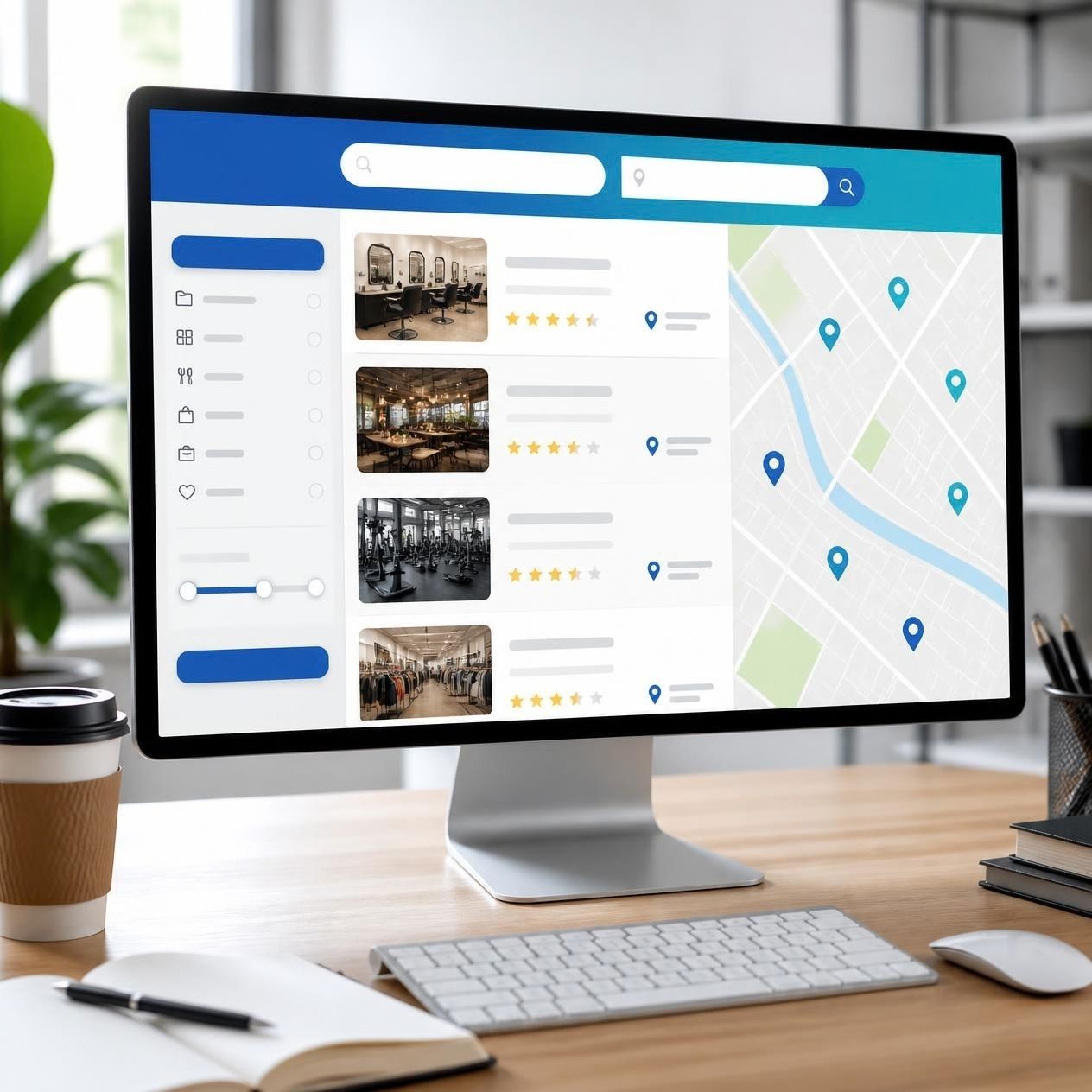
Think about the last time you needed a plumber, a new dentist, or a cozy café in an unfamiliar part of town. Chances are, you didn't flip through a phone book. You searched online, skimmed a few reviews, checked the hours, and made a decision in minutes. That everyday habit is exactly why local discovery has become one of the most important pieces of any small business's growth strategy, and why so many owners are rethinking how customers actually find them.
The truth is, a great product or a beautifully designed storefront doesn't matter much if people can't find you in the first place. Search engines have become the new front door for most businesses, and the way you show up there depends heavily on where your information lives online. Scattered, outdated, or inconsistent details across the web quietly chip away at your credibility, even if your business itself is thriving.
This is where a business listings website earns its place in your marketing toolkit. It acts as a centralized, trustworthy hub where your business name, address, phone number, hours, and services are presented clearly and consistently. Instead of hoping customers stumble upon accurate information, you're putting it directly in front of them, formatted in a way that search engines and shoppers both understand and trust.
What Exactly Is a Business Listing, and Why Does It Matter?
A business listing is essentially a digital profile of your company. It typically includes your name, category, location, contact details, website link, photos, and often customer reviews. On its own, one listing might not seem powerful. But when your information appears consistently across multiple reputable platforms, it sends a strong signal to search engines: this business is real, active, and worth recommending.
This consistency matters more than most business owners realize. Search algorithms cross-check details across the web, and mismatched phone numbers or old addresses can lower your visibility in local search results. A dedicated listings platform helps eliminate that risk by giving you one clean, verified source of truth that other sites and search engines can reference confidently.
The Local SEO Connection
Local SEO is built on three main pillars: relevance, distance, and prominence. Prominence, in particular, is shaped by how well-known and well-documented your business is across the internet, including how many quality listings mention you and how consistent those mentions are. A strong presence on a reputable directory contributes directly to that prominence score, which in turn influences whether you show up on the first page or get buried on the third.
There's also the matter of backlinks. Directory listings often include a link back to your official site, and while not every link carries equal weight, a collection of legitimate, relevant citations still contributes positively to your domain's overall authority. It's a small piece of a much larger SEO puzzle, but it's one that's easy to set up and maintain, which makes it a smart, low-effort win for busy business owners.
Building Trust Before the First Interaction
Trust is earned long before a customer walks through your door or clicks the checkout button. When someone finds your business through a directory, they're often comparing you against competitors in the same category. Clear photos, updated hours, genuine reviews, and a professional-looking profile can tip that decision in your favor. On the flip side, a blank or outdated profile can make even a well-run business look neglected or, worse, closed.
Reviews deserve special attention here. Most people read several before making a decision, and businesses with a healthy volume of recent, positive feedback tend to convert browsers into buyers more effectively than those without any social proof. Encouraging happy customers to leave a quick review on your listing is one of the simplest ways to build that trust at scale.
Choosing the Right Platform for Your Business
Not all directories are created equal. Some are bloated with outdated entries and spammy listings, which can actually hurt your credibility by association. When evaluating a platform, look for one that verifies businesses, offers a clean and mobile-friendly interface, and gives you control over how your profile appears. It also helps if the platform allows you to respond to reviews, update information in real time, and showcase photos or promotions without jumping through hoops.
It's also worth thinking about categorization. A platform that lets customers filter by industry, location, and specific services makes it far easier for the right people to find you, rather than getting lost among thousands of unrelated listings. The more targeted the discovery experience, the more qualified the leads that come your way.
Getting Started Without the Overwhelm
You don't need a marketing degree or a big budget to get this right. Start by claiming or creating your profile, filling in every available field, and uploading a handful of high-quality photos. Double-check that your business name, address, and phone number match exactly what's on your website and social media pages. Then set a reminder to revisit your listing every few months to keep hours, offers, and images current, especially around holidays or seasonal changes.
Consistency and a little ongoing attention go a long way. Businesses that treat their online profiles as a living part of their marketing, rather than a one-time setup task, tend to see steadier gains in visibility and customer trust over time.
Common Mistakes That Quietly Hurt Your Visibility
Even well-intentioned business owners fall into a few avoidable traps. Duplicate profiles are one of the most common, often created accidentally when a business relocates, rebrands, or gets listed by a third party without the owner's knowledge. Having two or three versions of the same profile floating around confuses both customers and search engines, splitting reviews and diluting your credibility instead of building it.
Another frequent misstep is leaving fields blank. An incomplete profile with no photos, no description, and no listed hours signals neglect, even to an algorithm that has no feelings about it one way or another. Filling out every relevant field, choosing accurate categories, and adding a short, keyword-aware description of what you do gives both customers and search engines more to work with when deciding whether you're the right match for a given search.
Ignoring negative reviews is another quiet reputation killer. A thoughtful, professional response to criticism often does more for your credibility than a wall of five-star ratings alone, because it shows real people are paying attention and genuinely care about the experience customers have with your business.
The Bottom Line
Being easy to find online isn't a luxury anymore; it's the baseline expectation customers bring to every search. Platforms like Yebble make it simple to build a complete, trustworthy profile that helps local customers discover you, compare you fairly, and ultimately choose you. If you haven't reviewed your online presence in a while, now is a good time to check what's out there, clean it up, and put your best digital foot forward.
Follow this link for another blog - Contractors Near Me