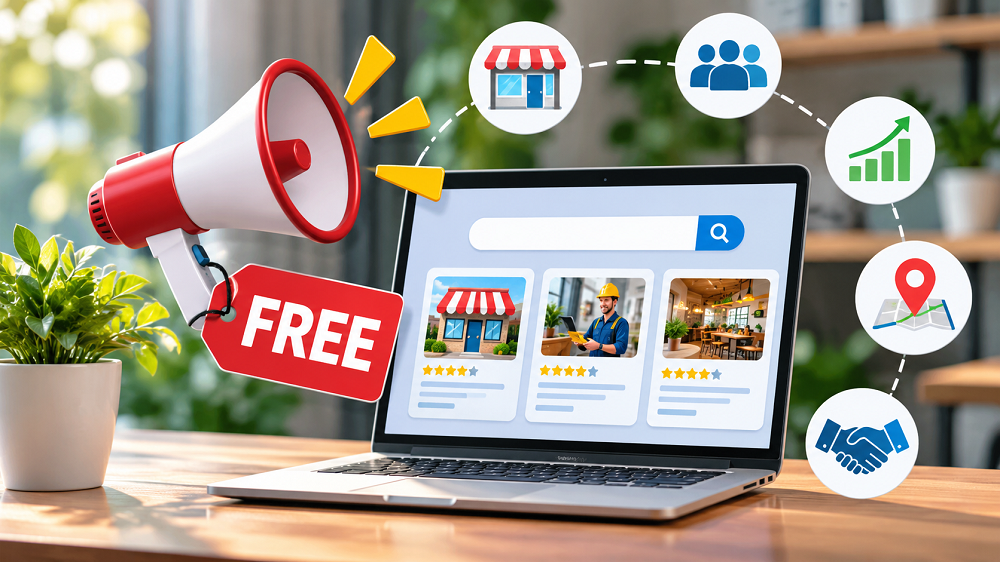
Every business owner has faced the same question at some point: how do you get noticed when the marketing budget is tight? Paid ads can drain your bank account fast, and the moment you stop paying, the traffic disappears. That’s why so many smart entrepreneurs turn to strategies that build visibility over time without a recurring bill.
The good news is that you don’t need deep pockets to get in front of customers. You need a plan, a bit of consistency, and a clear understanding of how people and search engines decide which businesses deserve attention. Off-page SEO sits right at the center of that process.
Done well, free business advertising is less about shouting louder than your competitors and more about being present, credible, and easy to find in all the places your customers already spend time. Directory profiles, reviews, social mentions, and backlinks all work together to tell the internet that your business is real, trusted, and worth recommending.
What Off-Page SEO Actually Means
Off-page SEO refers to everything that happens outside your website that influences how search engines view it. The biggest factor is backlinks, which are links from other sites pointing to yours. But it also includes brand mentions, online reviews, social engagement, local citations, and public relations efforts.
A helpful way to think about it is word of mouth, scaled up for the internet. When respected people speak well of you, others listen. Search engines behave similarly. The more trusted sources that reference your business, the more confident they become in ranking you.
The best part is that most of these signals can be earned without spending a cent. They cost time and effort instead of money, which makes them ideal for startups, freelancers, and small local companies.
Why Free Methods Often Beat Paid Ones Long Term
Paid advertising delivers quick results, but it stops the moment your budget runs out. Off-page SEO works differently. A backlink from a respected site can keep sending visitors and authority for years. A well-maintained business profile keeps showing up in searches day after day.
There’s also a trust factor. Many people scroll past ads without a second thought, yet they read reviews, check directory listings, and click on articles that mention a business they’re considering. Earned visibility feels more genuine, and that authenticity influences buying decisions.
That doesn’t mean paid campaigns are useless. They simply work best as a supplement to a strong organic foundation, not a replacement for one.
Start With Online Business Listings
If you do only one thing from this article, claim your business profiles. Google Business Profile, Bing Places, Apple Business Connect, Yelp, and industry-specific directories all let you list your company at no cost.
Each profile gives you space to share your address, phone number, hours, services, and photos. Many also provide a link back to your website. Because search engines cross-check this information across the web, consistency matters. Use exactly the same business name, address, and phone number everywhere.
Fill out every field, upload clear photos, and choose accurate categories. A complete profile looks professional and tends to earn more clicks than a bare-bones one. It’s also one of the most effective forms of free business advertising for any company that serves a local area, because it places you directly in front of people actively searching for what you offer.
Collect and Respond to Reviews
Reviews are social proof in its purest form. Shoppers trust the opinions of other customers, and search engines treat review volume, quality, and recency as ranking signals, particularly for local searches.
Ask for feedback at the right moment, right after a successful sale or service. A friendly request by email, text, or in person works well. Add a direct review link to your email signature or invoices to make it effortless.
Respond to every review, positive or negative. Thank people sincerely and address complaints with calm professionalism. Prospective customers often judge a business by how it handles criticism, so a thoughtful reply can turn a negative into a quiet advantage. Never buy reviews or offer prohibited incentives, since platforms can penalize or remove your profile.
Create Content Others Want to Link To
Content is the engine behind natural backlinks. When you publish something genuinely useful, other sites reference it without being asked.
Consider creating:
- How-to guides that solve a common problem in your industry
- Original data or surveys, even small ones, that others can cite
- Checklists and templates that people save and share
- Local resources, such as event calendars or neighborhood guides
Quality beats quantity here. One thorough, well-researched article will earn more attention than ten thin posts. Promote it on social media, share it in relevant communities, and mention it when you reach out to other site owners.
Guest Posting and Collaboration
Writing for other websites is a time-tested way to reach new audiences and earn quality links. Look for blogs, local publications, and industry sites that welcome contributors. Pitch specific ideas that fit their readers rather than sending generic requests.
Partnerships work too. Team up with complementary businesses for joint webinars, cross-promotions, or community events. A florist and a wedding photographer, for example, can mention and link to one another naturally. These relationships build trust, share audiences, and cost nothing but a conversation.
Use Social Media as an Amplifier
Social links are generally treated as signals rather than direct ranking factors, but social platforms still play a valuable role. They help your content get discovered, encourage shares, and make it more likely that journalists, bloggers, and customers will find and reference you.
Pick one or two platforms where your audience actually spends time and show up consistently. Share helpful tips, behind-the-scenes moments, and customer stories. Engage in conversations rather than just broadcasting. Over time, this builds familiarity, and familiarity builds trust.
Get Local Press and Community Mentions
Local newspapers, podcasts, newsletters, and community blogs are always looking for stories. Opening a new location, hosting a charity event, launching an unusual product, or reaching a milestone can all make a good pitch.
Sponsoring a local team or volunteering at community events can also earn mentions and links from organizations that value their supporters. These mentions come from trusted local sources, which carry real weight with search engines.
You can also sign up for free expert-source services where journalists request quotes. Responding with helpful, concise answers can land your business in articles that would otherwise cost thousands in advertising.
Avoid Shortcuts That Backfire
Where there’s opportunity, there are shortcuts that promise instant results. Buying bulk links, joining link farms, or posting spam comments might look tempting, but search engines are quite good at spotting these tactics. The penalties can wipe out months of progress.
Stick to practices that offer genuine value to people. If a tactic wouldn’t make sense without search engines in the picture, it’s probably not worth doing. Sustainable growth comes from being useful, honest, and visible in the right places.
Track Progress and Keep Improving
Free doesn’t mean unmeasured. Use free tools like Google Search Console and Google Analytics to see which pages attract visitors, where your links come from, and how people find you. Watch for new backlinks, rising branded searches, and growth in profile views.
Review your efforts every month or two. Double down on what works, whether that’s reviews, guest posts, or local partnerships, and drop what doesn’t. Off-page SEO rewards patience, so expect gradual gains rather than overnight spikes.
Final Thoughts
Growing a business without a large advertising budget is absolutely possible. By claiming your listings, earning reviews, publishing valuable content, building relationships, and staying active in your community, you create a reputation that works for you around the clock.
If you’d rather not juggle every profile and platform on your own, tools like Yebble can help you organize your presence, reach more customers, and keep everything consistent in one place. Start with one small step today, and let your visibility build from there.
Follow this link for another blog - Claim Your Business Listing Online